
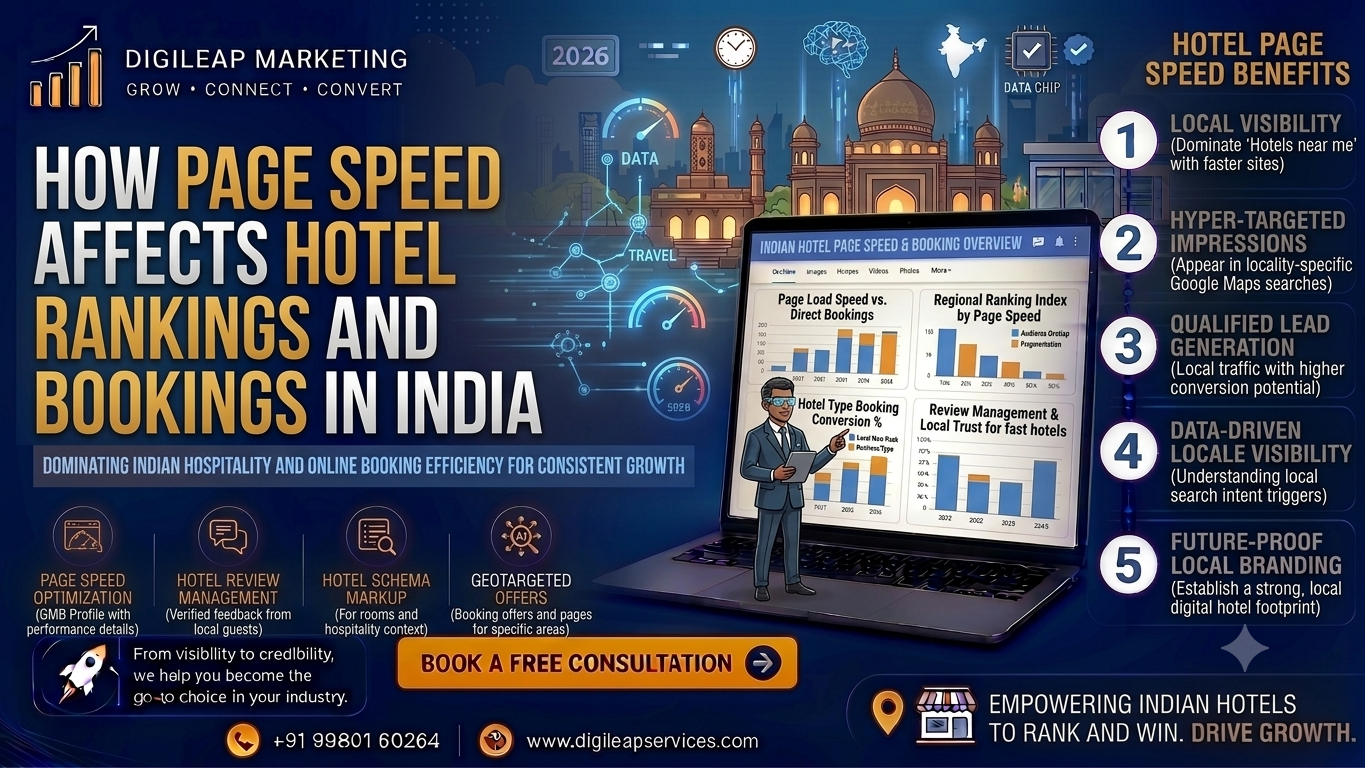
How Page Speed Affects Hotel Rankings and Bookings in India
Have you ever waited for a website to load and then left because it was too slow? If yes, you’re not alone. In fact, many people in India make quick choices based on how fast a site loads. When it comes to hotels, this matters a lot. A slow website can cost hotels visitors, bookings, and even rank lower in search engines. This blog will explain why page speed hotel is so important in plain simple English.
Why Page Speed Matters for Hotels
First of all, page speed is the time it takes for your hotel website to load fully. If your site takes too long, people get tired and leave. So then, fewer people see your hotel rooms and rates. Now let’s break down how this one thing affects your hotel’s success.
When someone searches for a hotel online, they expect answers fast. Especially in India, where many people use mobile phones with limited data. If your website takes even a few extra seconds, visitors click back to the search results and go to your competitor’s site. That means lost bookings and lost revenue.
Moreover, search engines like Google care about page speed too. They show faster sites higher in search results because users have better experience there. Therefore, hotels with better page speed hotel performance will rank higher. And higher ranking means more eyes on your hotel, more clicks, and more bookings.
How Slow Page Speed Hurts Your Hotel Bookings
Let’s imagine you own a hotel in Goa or Mumbai. You have great rooms and prices, but your website is slow. What happens? People visit but leave before they even see your photos. This is called a “bounce.” When many people bounce, search engines think your site isn’t useful, so they push it further down the list.
Also, slow sites give a bad impression. If someone sees your hotel website is slow, they may think your hotel service is slow too. Even if that’s not true, first impressions count. So your bookings drop. In India, where competition is fierce, slow sites lose out fast.
In addition, slow page speed affects mobile users heavily. Most Indians book hotels on phones. If your mobile pages are slow, they lose interest quickly. As a result, your conversion rate drops, meaning fewer people complete a booking after visiting your site.
How Page Speed Affects Search Rankings
Search engines use many factors to rank websites. One big factor is page experience. Page speed is part of this experience. Google and other search engines want to give users the best results. So they reward sites that load fast.
If your hotel site loads quickly, search engines see it as user friendly. Then your site climbs up the rankings for popular searches like “best hotels in Jaipur” or “budget hotels in Delhi.” But if your site is slow, you stay lower down and get less traffic.
Think about it this way: when you search online, how many pages do you check? Most people look at the first page only. Very few go to the second or third page. So ranking matters. Better page speed hotel performance means better ranking, which leads to more visibility and more bookings.
How to Test Your Page Speed
Before you can fix page speed, you need to test it. There are free tools online that show how fast your site loads and what needs fixing. These tools give scores and suggestions.
First, test your homepage. Then test booking pages, as these are most important for conversions. If the booking page loads slowly, people leave before they book.
Also test on mobile. Many tools show separate scores for desktop and mobile. Since most hotel bookings in India come from phones, mobile speed is crucial. By checking your page speed regularly, you can catch issues early and fix them.
Remember, improving speed doesn’t have to be technical or expensive. Sometimes, simple fixes like compressing images or reducing unnecessary code can make a big difference.
Simple Ways to Improve Page Speed
Now that you know why speed matters, let’s talk about easy ways to improve it. You don’t have to be a tech expert.
First, compress images. High resolution images are great for visuals, but they can slow down your site. Compressing images keeps quality but reduces size. This makes pages load faster.
Second, use a reliable hosting provider. Your hosting affects how fast your site loads. If your hotel website is on a slow server, everything will be slow. A good hosting service improves speed instantly.
Third, use caching tools. Caching saves copies of your pages so they load faster when people visit. Many hotel website systems and plugins offer easy caching setup.
Fourth, reduce plugins and scripts. Too many add-ons can slow your site. Remove anything you don’t need.
Fifth, implement lazy loading. This means images load only when users scroll to them. It speeds up the initial load time.
Lastly, keep your website updated. Outdated themes and plugins can slow things down. Regular updates keep things running smoothly.
By using these steps, your site loads faster. And faster load times mean better page speed hotel results overall.
Real Benefits of Fast Page Speed
Let’s talk about what happens when you improve your page speed. First, more people stay on your site longer. They look at rooms, photos, and prices with ease. So your chances of converting visitors into bookings go up.
Second, fast sites rank better. This means more people see your hotel when they search online. More visibility leads to more traffic and more bookings.
Third, good page speed improves trust. When visitors see a fast, smooth site, they feel confident booking with you. Even foreign tourists value fast sites because they often book while travelling.
Plus, fast sites use less data, which matters for users in India who may have limited data plans. When users spend less data, they feel happier and are more likely to book.
In short, fast page speed boosts user experience, builds trust, increases traffic, and raises your bookings.
How to Track Improvement
After you make changes, you need to see the results. Track your site speed and user metrics. Look at bounce rates, time on site, and booking conversion rates. If these improve, you’re on the right track.
You can also compare rankings in search engines. If you move up in the results, it shows search engines see your site as better. More clicks follow. Tools like Google Analytics help you track these numbers easily.
Keep testing and improving. Technology changes and so do user expectations. Regular monitoring keeps you ahead.
TL;DR
Slow websites lose visitors and bookings fast. Page speed hotel is a key factor in search rankings and user experience. Faster pages help your hotel show higher in search results and convert more visitors into bookings. Test your speed, fix images, use good hosting, reduce plugins, and track your results to see improvements.
Conclusion
In today’s digital world, page speed can make or break your hotel’s online success in India. A slow site frustrates users, lowers your search rankings, and cuts bookings. But a fast website keeps people engaged, builds trust, and boosts conversions. The good news is that improving speed doesn’t have to be hard. With a few simple steps, you can have a faster website that attracts more visitors and more bookings.