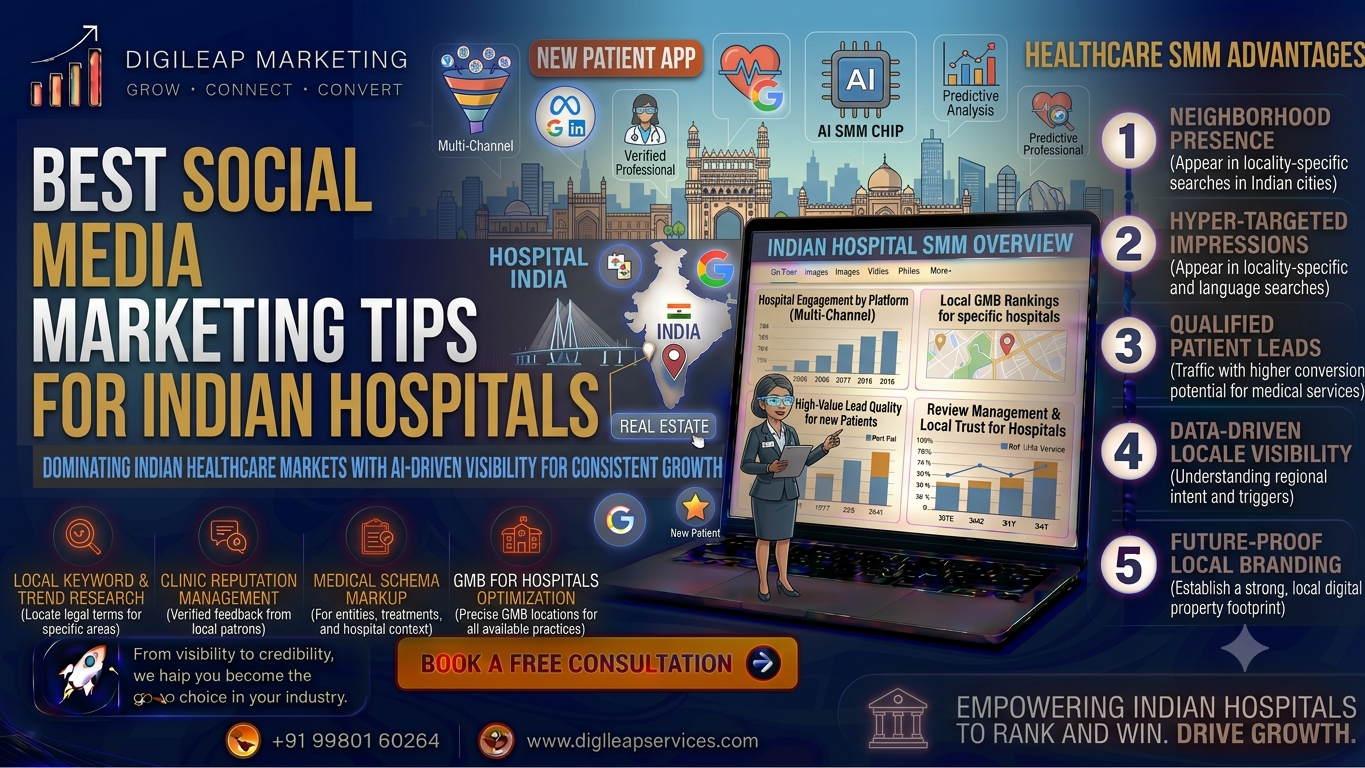
Best Social Media Marketing Tips for Indian Hospitals
Social media has changed how patients learn about hospitals, doctors, treatments, and health services. Before booking an appointment, many people now check a hospital’s online presence, read educational posts, watch doctor videos, and look at patient experiences. Therefore, Hospital Social Media Marketing India has become an important part of building visibility and trust. However, hospitals need a different approach from ordinary brands. Their content must be accurate, responsible, easy to understand, and focused on helping patients rather than simply promoting services.
India also has a huge digital audience. According to DataReportal’s Digital 2026 India report, India had around 500 million social media user identities in October 2025. This gives hospitals a large audience to reach with useful health information, preventive care advice, service updates, and expert-led content.
Build Trust Before Trying to Promote Services
Trust should come before promotion in healthcare marketing. Patients want to know whether they can rely on a hospital and its medical team. Therefore, hospitals should share useful information that answers common patient questions.
For example, doctors can explain symptoms that may require medical attention, the importance of regular health checks, or what patients can expect during common procedures. Hospitals can also introduce departments, explain available facilities, and share general preventive health advice.
This approach makes Hospital Social Media Marketing India more patient-focused. Instead of repeatedly asking people to book appointments, hospitals provide value first. Over time, useful and consistent communication can strengthen familiarity and credibility.
Healthcare organisations also need to be especially careful about accuracy. Medical posts should be reviewed by qualified professionals, and social content should not replace personalised medical advice. Clear language can help patients understand information without creating unnecessary fear or confusion.
Use Short Videos to Explain Healthcare Topics
Video content can make complicated medical topics easier to understand. Hospitals can create short videos in which doctors answer common questions in simple language. For example, a cardiologist could discuss everyday heart-health habits, while a paediatrician could explain when parents should seek professional care for a child.
Videos can also introduce hospital departments, explain diagnostic procedures, show patient facilities, or answer frequently asked questions about appointments.
Instagram is particularly relevant in India. DataReportal reports that Instagram’s advertising tools indicated about 481 million users in India in late 2025, although advertising reach figures should not be treated as the same as monthly active users.
Therefore, video should be an important part of Hospital Social Media Marketing India. However, hospitals should avoid making exaggerated treatment claims or presenting individual medical outcomes as guaranteed results. Educational videos should inform people and encourage them to seek appropriate professional advice when needed.
Choose Social Platforms Based on Your Audience
Hospitals do not need to post the same content everywhere. Instead, they should understand why people use each platform.
Instagram can work well for short educational videos, health awareness posts, doctor introductions, and hospital updates. Facebook can support community communication and longer educational content. YouTube is useful for detailed doctor interviews, patient education videos, webinars, and procedure explanations. Meanwhile, LinkedIn can help hospitals communicate with healthcare professionals, potential employees, partners, and industry leaders.
A strong Hospital Social Media Marketing India strategy adapts the message to each platform while keeping the hospital’s tone and identity consistent.
Hospitals should also consider language. India has a diverse population, so regional-language content can make important health information easier to understand. However, the medical meaning must remain accurate when content is translated.
Create Educational Content Patients Can Actually Use
People usually follow healthcare pages because they want useful information. Therefore, hospitals should build their content calendars around real patient needs.
Instead of posting only about treatments, hospitals can explain preventive healthcare, seasonal illnesses, vaccination awareness, nutrition, screening, maternal health, child health, senior care, and emergency warning signs. Content can also address common myths when doctors can provide clear, evidence-based explanations.
Research from Sprout Social notes that healthcare organisations operate in an environment where people increasingly encounter health information—and misinformation—on social platforms. Its healthcare benchmark research analysed more than 3 billion social messages across over 1 million public profiles.
For Hospital Social Media Marketing India, this creates an opportunity to become a reliable source of clear health information rather than adding to online noise.
Hospitals should also plan content around important health awareness dates, but posts should provide useful information rather than simply displaying a generic awareness graphic.
Make Doctors a Visible Part of the Hospital Brand
Doctors are among a hospital’s strongest sources of expertise. Therefore, hospitals can make medical professionals an important part of their social content.
Short Q&A sessions, doctor interviews, myth-versus-fact videos, educational reels, and live discussions can help people understand healthcare topics from qualified professionals. These formats can also make a large hospital feel more approachable.
However, every piece of content should respect patient privacy and professional standards. Hospitals should obtain appropriate consent before sharing identifiable patient stories, photos, or videos.
When used responsibly, doctor-led content strengthens Hospital Social Media Marketing India because it puts real expertise behind the information being shared.
Build Strong Patient Engagement on Social Media
Social media is a two-way communication channel. People may ask questions, leave feedback, or comment on their hospital experience. Therefore, hospitals should have a clear response process.
Teams should reply politely and quickly where possible. However, they should never ask patients to publicly share sensitive medical information. When a conversation requires personal details, the hospital should guide the person towards an appropriate private or official support channel.
Negative feedback also requires care. A defensive reply can damage trust further. Instead, acknowledge the concern, remain professional, and explain how the person can contact the hospital directly.
This approach helps Hospital Social Media Marketing India support both patient experience and online reputation.
Measure Results Instead of Focusing Only on Followers
A large follower count does not automatically mean that a social media strategy works. Hospitals should measure results that connect with real communication and business goals.
For example, teams can track engagement, video views, website visits, appointment-page traffic, enquiries, campaign conversions, and the types of health content that receive the strongest response.
Hospitals can then improve future campaigns based on these insights. If doctor Q&A videos generate more useful engagement than static promotional posts, the content plan can give more space to expert videos.
For professional support, hospitals can explore Digileap India’s digital marketing services, which include organic marketing, social media strategies, content marketing, and lead-generation support.
Keep Healthcare Content Ethical and Accurate
Social media moves quickly, but hospitals should never sacrifice accuracy for speed. Every medical claim should come from reliable evidence and appropriate clinical expertise.
At the same time, content does not need to sound highly technical. Simple language, short explanations, and practical advice often make healthcare information more accessible. Hospitals should also clearly distinguish general educational information from personalised medical guidance.
Most importantly, Hospital Social Media Marketing India should focus on helping people make better-informed healthcare decisions while protecting privacy and maintaining professional standards.
Conclusion
Social media can help Indian hospitals educate communities, improve visibility, communicate with patients, and build long-term trust. The strongest strategy combines useful educational content, doctor-led videos, platform-specific communication, careful patient engagement, and regular performance measurement. Hospitals that stay consistent, and patient-focused can turn their social presence into a valuable communication channel.
TL;DR
Indian hospitals can improve social media results by sharing useful health education, creating short doctor-led videos, choosing platforms based on their audience, responding professionally to patients, protecting privacy, and tracking meaningful results. With hundreds of millions of social media users in India, a clear and responsible strategy can help hospitals strengthen their digital presence and connect with patients at different stages of their healthcare journey.
Book a call with our expert to know more about social media tips