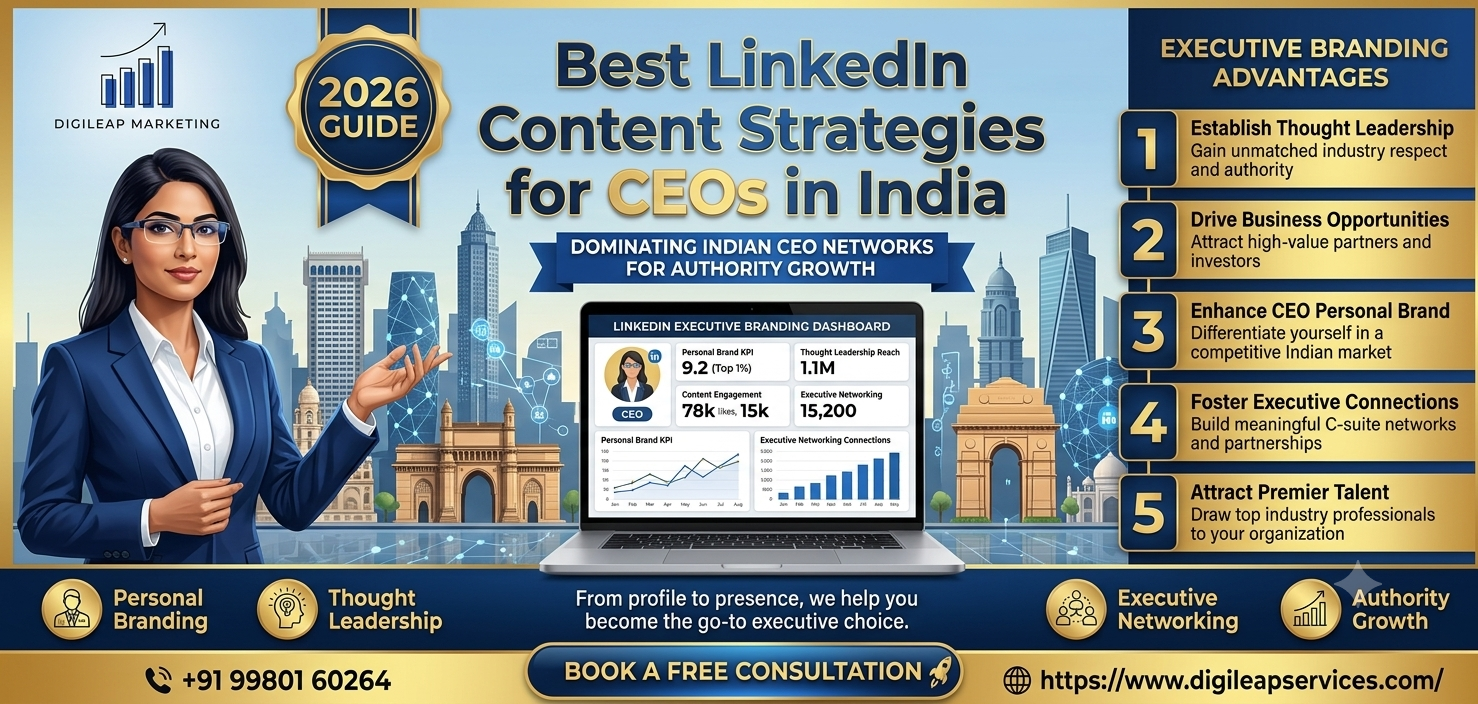
Best LinkedIn Content Strategies for CEOs in India
Introduction
Today, people want to know the person behind a business before they trust the brand. This is why LinkedIn has become an important platform for CEOs in India. It helps leaders share ideas, build trust, connect with industry experts, and attract new business opportunities. However, simply posting company updates is not enough. CEOs need to share useful ideas, answer real questions, and show their experience.
LinkedIn Personal Branding India is about building a strong professional image through useful content and regular communication. When CEOs share their views, lessons, and business goals, they give people a reason to follow them. Moreover, they help customers, employees, investors, and partners understand their values. With the right plan, LinkedIn can become a valuable tool for business growth.
Why LinkedIn Matters for CEOs in India
LinkedIn gives CEOs a direct way to speak to their audience. Instead of relying only on company pages, leaders can share their own views and take part in industry discussions. As a result, they can build stronger relationships with people who matter to their business.
According to LinkedIn’s official marketing statistics and insights, the platform offers access to a large professional audience. This makes it useful for leaders who want to reach decision-makers and industry professionals.
Furthermore, a CEO’s personal profile can help make a company feel more human. People can learn about the leader’s goals, work culture, and approach to business. Therefore, a clear content plan can support brand trust, hiring, partnerships, and sales.
1. Start With a Clear Personal Brand Message
Before creating posts, CEOs should decide what they want people to remember about them. For example, a technology CEO may want to share ideas about AI, while a business consultant may focus on leadership and growth.
A clear message helps keep content useful and consistent. First, choose two or three main topics that match your work and experience. Next, update your headline, profile photo, About section, and work details. Then, make sure your posts support the same message.
For effective LinkedIn Personal Branding India, CEOs should focus on their real skills instead of trying to cover every topic. This helps the right audience understand their expertise. In addition, a clear profile gives new visitors a reason to connect and follow.
2. Use the H.O.O.K. Framework to Get Attention
The first few lines of a LinkedIn post matter because readers often scroll quickly. Therefore, CEOs should start with a strong hook that makes people want to read more.
The H.O.O.K. framework can help leaders create better openings. H stands for a headline that catches attention. O stands for an observation about a real problem. The next O introduces an open question or an unexpected fact. K stands for keeping the reader curious.
For example, a CEO could start with, “We lost a major client even though our product worked well. Here is what we learned.” This opening creates interest and sets up a useful lesson.
However, the hook must match the rest of the post. Avoid false promises or dramatic claims that add no value. Instead, use a real challenge, a clear question, or a lesson from your own work.
3. Follow the V.A.L.U.E. Framework
A strong opening gets attention, but useful content keeps people reading. The V.A.L.U.E. framework helps CEOs build posts around what their audience needs.
V stands for valuable advice. A stands for actionable steps. L stands for lessons from experience. U stands for useful examples. E stands for evidence that supports the message.
For instance, a CEO can explain how the company improved customer service, reduced delays, or solved a team problem. They can then share the steps behind the result and explain what other leaders can learn from it.
This approach makes LinkedIn Personal Branding India more than a way to gain likes. It turns each post into an opportunity to teach, build trust, and start meaningful conversations. Moreover, useful content gives readers a reason to return to the CEO’s profile.
4. Share Real Stories and Business Lessons
People often connect with stories because they show what happens in real life. CEOs can use their work experience to explain how they make decisions, handle setbacks, and lead teams.
For example, share a mistake that changed your approach to hiring. Explain what went wrong, what you learned, and what you would do differently today. Similarly, discuss a customer challenge and the steps your team took to solve it.
Keep the story simple and honest. Do not share private customer details or confidential business information. Instead, focus on the lesson and its value to the reader.
These stories help LinkedIn Personal Branding India feel genuine because they show the person behind the title. They also help readers understand the CEO’s values without relying on broad claims about leadership.
5. Create Different Types of LinkedIn Content
Posting the same type of content every week can make a profile feel repetitive. Therefore, CEOs should use different formats to explain ideas and reach people with different interests.
Text posts work well for short opinions, business lessons, and industry questions. Carousels can explain a process in simple steps. Short videos allow leaders to speak directly to their audience. Polls can collect opinions about business challenges, while articles can cover complex topics in more detail.
According to LinkedIn’s official guide to creating content, members can use different publishing options to share ideas and professional knowledge. CEOs should choose the format that best fits their message instead of using every format at once.
For example, one week could include a leadership lesson, a short video about an industry change, and a carousel with practical business tips. This mix keeps the profile useful while allowing the CEO to maintain a clear message.
6. Build a Simple and Consistent Posting Plan
Consistency helps people know what to expect from a CEO’s profile. However, posting every day is not necessary if it reduces content quality. Start with two or three useful posts per week and increase the pace only when it feels manageable.
A simple weekly plan can include one personal lesson, one industry insight, and one practical tip. In addition, spend time commenting on posts from customers, employees, industry experts, and business partners.
A good LinkedIn Personal Branding India plan should also leave room for current events and fresh business lessons. For example, if a major industry change affects your customers, explain what it means and what they can do next.
Most importantly, keep a regular schedule and review what works. A smaller number of useful posts can create more value than frequent posts without a clear purpose.
7. Use Data to Improve Your Content
CEOs should not judge success by likes alone. Instead, track whether the content reaches the right people and supports business goals.
LinkedIn’s own analytics can help you review post impressions, engagement, follower growth, and other available performance measures. Furthermore, track profile views, relevant connection requests, and meaningful messages that follow your posts.
As a second useful data point, LinkedIn has reported that four out of five members drive business decisions. This highlights the platform’s relevance to professional audiences, although it does not guarantee results for every post or business.
Review your performance every month. Identify which topics attract useful comments, which posts reach your target audience, and which discussions lead to valuable business conversations. Then, use those findings to improve your next content plan.
8. Engage With Your Audience
Publishing content is only one part of building a strong LinkedIn presence. CEOs should also take part in conversations. Reply to thoughtful comments, ask follow-up questions, and thank people who share useful views.
Moreover, comment on relevant posts from industry leaders and potential partners. Avoid comments such as “Great post” when you can add a helpful idea or a different point of view.
This activity helps CEOs build relationships over time. It also shows that they listen to others rather than only promoting their own business. For leaders who want support with content planning, SEO, and digital growth, the Digileap website offers a starting point for exploring digital marketing services.
Conclusion
LinkedIn gives CEOs in India a useful way to share expertise, build trust, and develop professional relationships. However, strong results need more than regular posting. Leaders should use clear messages, real stories, useful advice, and consistent engagement.
By applying the H.O.O.K. and V.A.L.U.E. frameworks, CEOs can create content that catches attention and gives readers something useful. They should also review performance and improve their plan over time. In the long run, LinkedIn Personal Branding India works best when leaders share honest insights and focus on helping their audience.
TL;DR
CEOs in India can build a strong LinkedIn presence by defining their personal brand, opening posts with clear hooks, and sharing useful advice through real stories. Use the V.A.L.U.E. framework to offer practical lessons, mix content formats, post consistently, track results, and engage with your audience. Focus on trust and useful conversations rather than likes alone.