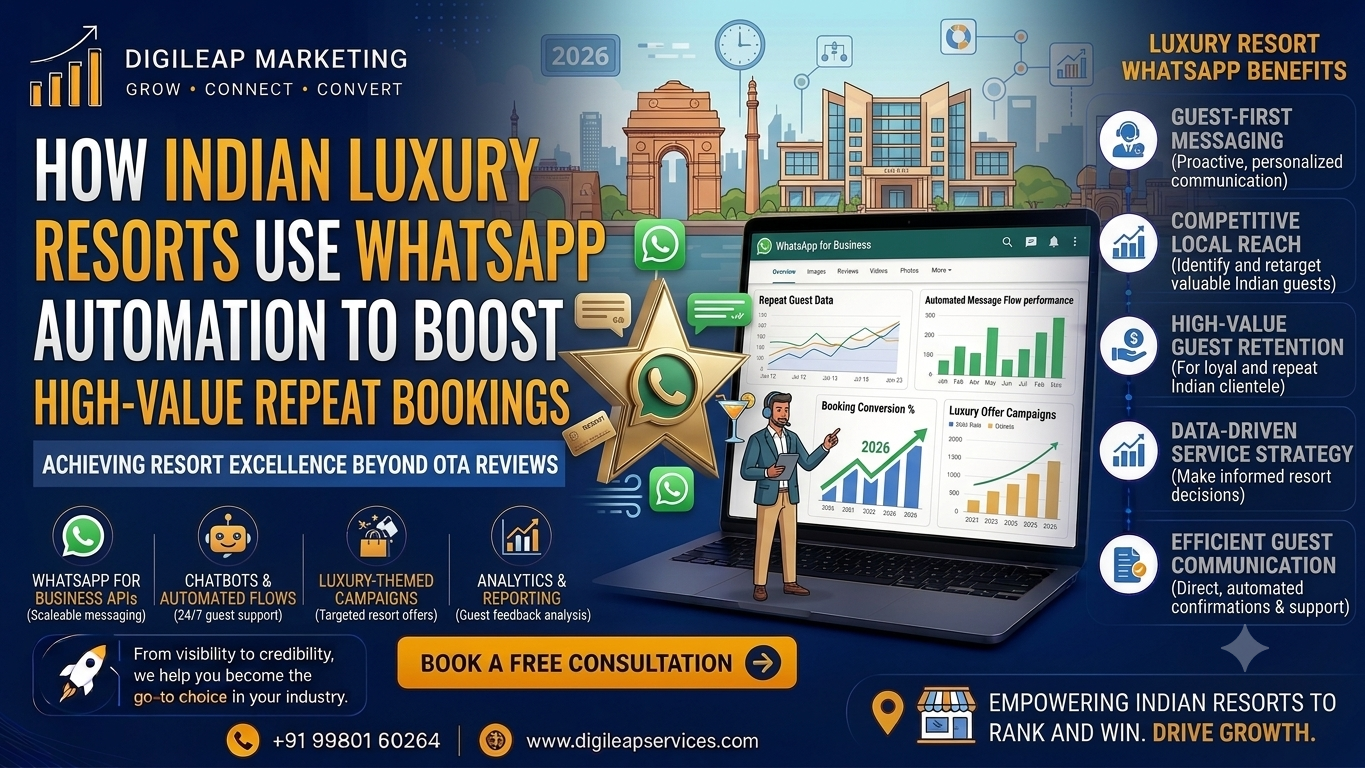
Beyond OTA Reviews: How Indian Luxury Resorts Use WhatsApp Automation to Boost High-Value Repeat Bookings
Luxury resorts in India spend heavily to attract guests, yet many lose the opportunity to build a direct relationship after checkout. A guest may discover a resort through an OTA, enjoy a memorable stay, leave a review, and then disappear into the same booking cycle months later. However, WhatsApp gives resorts a practical way to stay connected without making guests download another app. With the right strategy, resorts can Automate Guest Loyalty Repeat journeys and turn past visitors into valuable direct-booking customers.
The opportunity is especially strong in India because WhatsApp already fits naturally into everyday communication. Recent hospitality technology sources report that India has more than 500 million WhatsApp users, while hotel-focused platforms increasingly use the channel for booking confirmations, concierge services, feedback and loyalty campaigns. For luxury resorts, that means the post-stay relationship does not have to end when the guest checks out.
Why OTA Reviews Are Not Enough
OTA reviews remain important because they influence new travellers during the research stage. A strong rating can improve trust, reduce hesitation and help a resort compete with similar properties. Nevertheless, a review is usually the end of one guest journey rather than the beginning of another.
The bigger opportunity lies in what happens after the review. A guest who stayed at a luxury resort already knows the property, understands its service level and has experienced its rooms, restaurants and facilities. Therefore, the resort does not need to convince that person from scratch. Instead, it needs to give them a compelling reason to return.
This is where resorts can Automate Guest Loyalty Repeat communication. Rather than sending generic promotional messages, they can create personalised WhatsApp journeys based on previous stays, preferences, occasions and booking behaviour. The result is a relationship that feels less like advertising and more like thoughtful hospitality.
WhatsApp Turns a Past Guest Into a Direct Relationship
Traditional email campaigns often struggle to create the same immediacy as messaging. Guests may miss an email, ignore it or open it weeks later. WhatsApp, by comparison, allows a resort to communicate through a channel guests already use every day.
More importantly, WhatsApp supports two-way conversations. A guest can ask about room availability, enquire about a spa package, request a quote or respond to a seasonal offer without leaving the conversation. This removes several steps between interest and booking.
For luxury resorts, this creates a valuable shift. Instead of relying entirely on OTAs to bring the same customer back, the property can build its own database of opted-in guests and communicate with them directly. Some hospitality providers report OTA commissions in the 15%–25% range, which shows why even a modest increase in direct repeat bookings can have a meaningful effect on margins.
Build Loyalty Around the Guest, Not the Promotion
The biggest mistake resorts can make is treating WhatsApp as another broadcast advertising channel. Sending “20% OFF THIS WEEKEND” to every past guest may create short-term clicks, but it does little to build genuine loyalty.
Instead, resorts should use guest data to understand why someone visited in the first place. A couple who booked a romantic suite may respond to an anniversary escape. A family that travelled during the school holidays may appreciate an early-access family package. A corporate guest may respond better to weekday business retreat offers.
This approach allows resorts to Automate Guest Loyalty Repeat experiences around relevance rather than frequency. Automation can determine which message a guest receives, when they receive it and what offer makes sense based on their previous interaction.
For example, a resort could send a simple message several months after checkout saying that it would be delighted to welcome the guest again. Later, it could introduce an exclusive returning-guest experience. Finally, if the guest shows interest, the conversation can move toward availability and direct booking.
Start the Loyalty Journey Before Checkout
Repeat booking strategies should not begin six months after the guest leaves. In fact, the strongest loyalty journey can start during the stay itself.
Imagine a guest spending three nights at a luxury resort in Goa. During the stay, the resort can use WhatsApp to share spa availability, restaurant timings, activity suggestions and concierge support. These interactions create useful behavioural signals.
The guest may repeatedly enquire about spa treatments, prefer a particular restaurant or ask about late checkout. That information can become part of the guest profile, subject to appropriate consent and privacy practices.
After checkout, the resort can thank the guest, request feedback and invite them to stay connected. Over time, these interactions create a much richer customer profile than a simple OTA review.
Consequently, resorts can Automate Guest Loyalty Repeat campaigns using actual guest interests instead of sending identical messages to everyone.
Personalised Messages Create Higher-Value Opportunities
Luxury hospitality is rarely about selling the cheapest available room. The goal is often to increase the overall value of each returning guest.
WhatsApp automation can support this by introducing relevant experiences alongside accommodation. A returning couple could receive a message about a private dinner. A family could receive an activity package. A wellness-focused guest could receive a spa retreat offer. A frequent business traveller could receive an extended-stay package.
This matters because repeat guests may already have confidence in the property. They know the service, location and atmosphere. As a result, they may be more receptive to premium experiences when the resort presents them at the right time.
One hospitality technology provider reports an 18% increase in ancillary revenue per booking after introducing WhatsApp-based pre-arrival offers, although individual property results will naturally vary. The broader lesson is simple: WhatsApp can support revenue beyond room sales when resorts use it as part of the complete guest journey.
Use Timing to Make Automation Feel Human
Automation becomes powerful when it works quietly in the background. However, timing determines whether it feels helpful or intrusive.
A message immediately after checkout can focus on gratitude and feedback. A later message can remind the guest about a memorable experience. A seasonal message can connect with the guest’s likely travel period. If the guest clicks or responds, the resort can continue the conversation. If they do not engage, the system should avoid repeatedly pushing the same offer.
For instance, a resort might recognise that a guest visited during Diwali last year. Instead of sending a generic discount months in advance, it could invite the guest to an early-access festive stay package. The message feels more personal because it connects with a previous travel pattern.
Therefore, resorts that Automate Guest Loyalty Repeat journeys should focus on context, timing and value rather than message volume.
Turn Reviews Into Conversations
Reviews should not be treated as isolated marketing assets. They can become the bridge between reputation management and retention.
After checkout, a resort can ask guests for private feedback first. If the experience was positive, the guest can then be invited to share a public review on the relevant platform. If the guest reports a problem, the resort can route the conversation to its service team before the issue becomes a negative public review.
This creates a more responsive guest experience. Instead of waiting for a poor review to appear, the resort gets an opportunity to resolve concerns directly.
After that interaction, the guest can enter an appropriate loyalty segment. A satisfied guest may receive future experience invitations, while a guest who experienced a service issue may receive a more careful follow-up after the resort has addressed the concern.
Connect WhatsApp With the Booking Engine
WhatsApp automation works best when it connects with the systems already used by the resort. A standalone messaging account can answer basic questions, but deeper automation requires integration with the property management system, booking engine and customer database.
When these systems communicate, a resort can create journeys based on booking dates, room types, guest history and previous interactions. It can also provide direct booking links or route complex questions to human staff.
This is where digital marketing and hospitality technology meet. Agencies such as Digileap India work across digital channels including SEO, PPC, social media, content marketing, email marketing and lead generation, creating opportunities for resorts to connect WhatsApp campaigns with broader acquisition and retention strategies.
Measure Repeat Revenue, Not Just Message Engagement
A WhatsApp campaign should not be considered successful simply because many people opened or clicked a message. Luxury resorts need to connect communication with commercial outcomes.
The most useful metrics include repeat booking rate, direct booking share, average booking value, revenue per returning guest and ancillary revenue. Resorts should also track how many guests move from an OTA booking to a direct relationship and how many eventually book again without an intermediary.
This helps management understand the true value of automation. A campaign that generates fewer clicks but produces several high-value suite bookings could outperform a campaign that receives thousands of low-intent interactions.
Over time, these insights can also improve segmentation. Resorts can identify which guest groups return most frequently, which offers drive the highest booking values and which periods create the strongest response.
Protect the Luxury Experience With Responsible Automation
Luxury guests expect personal service, so automation should never make communication feel robotic. The purpose is not to replace hospitality teams. Instead, it should remove repetitive work and allow staff to spend more time on conversations that require empathy and judgement.
Resorts should also communicate only with guests who have provided appropriate consent and should make it easy to stop promotional messages. Data security, privacy and responsible handling of guest information should remain central to the strategy.
Most importantly, automated messages should have a clear purpose. A useful check-in reminder, personalised experience suggestion or thoughtful return invitation can strengthen the relationship. Repeated generic promotions can quickly weaken it.
The Future of Repeat Resort Bookings Is Direct
Indian luxury resorts have spent years competing for visibility on OTAs. However, the next competitive advantage may come from what happens after the first booking.
The resort that remembers a guest’s preferences, communicates at the right moment and offers a relevant experience can create a stronger relationship than one that simply waits for another OTA reservation. WhatsApp makes that relationship easier to maintain because the guest does not need to download a new application or navigate a complicated loyalty portal.
Ultimately, resorts that Automate Guest Loyalty Repeat journeys can move beyond collecting reviews and start building direct, long-term guest relationships. The winning strategy is not to eliminate OTAs overnight. It is to use OTA visibility to acquire guests, deliver an exceptional stay and then encourage those guests to return directly.
Conclusion
OTA reviews help luxury resorts attract attention, but direct guest relationships create longer-term value. WhatsApp automation gives Indian resorts a practical way to stay connected after checkout, personalise offers, support guest service and encourage high-value repeat bookings.
When resorts combine guest data, thoughtful timing, personalised communication and direct booking journeys, loyalty becomes more than a points programme. It becomes an ongoing relationship that can improve revenue while giving guests a more convenient experience.
TL;DR
Indian luxury resorts can use WhatsApp automation to turn one-time OTA guests into repeat direct customers. By combining personalised messages, post-stay feedback, relevant experiences, timely offers and direct booking links, resorts can reduce dependence on intermediaries and strengthen guest relationships. The key is to use automation as an extension of hospitality, not as another mass-marketing channel.