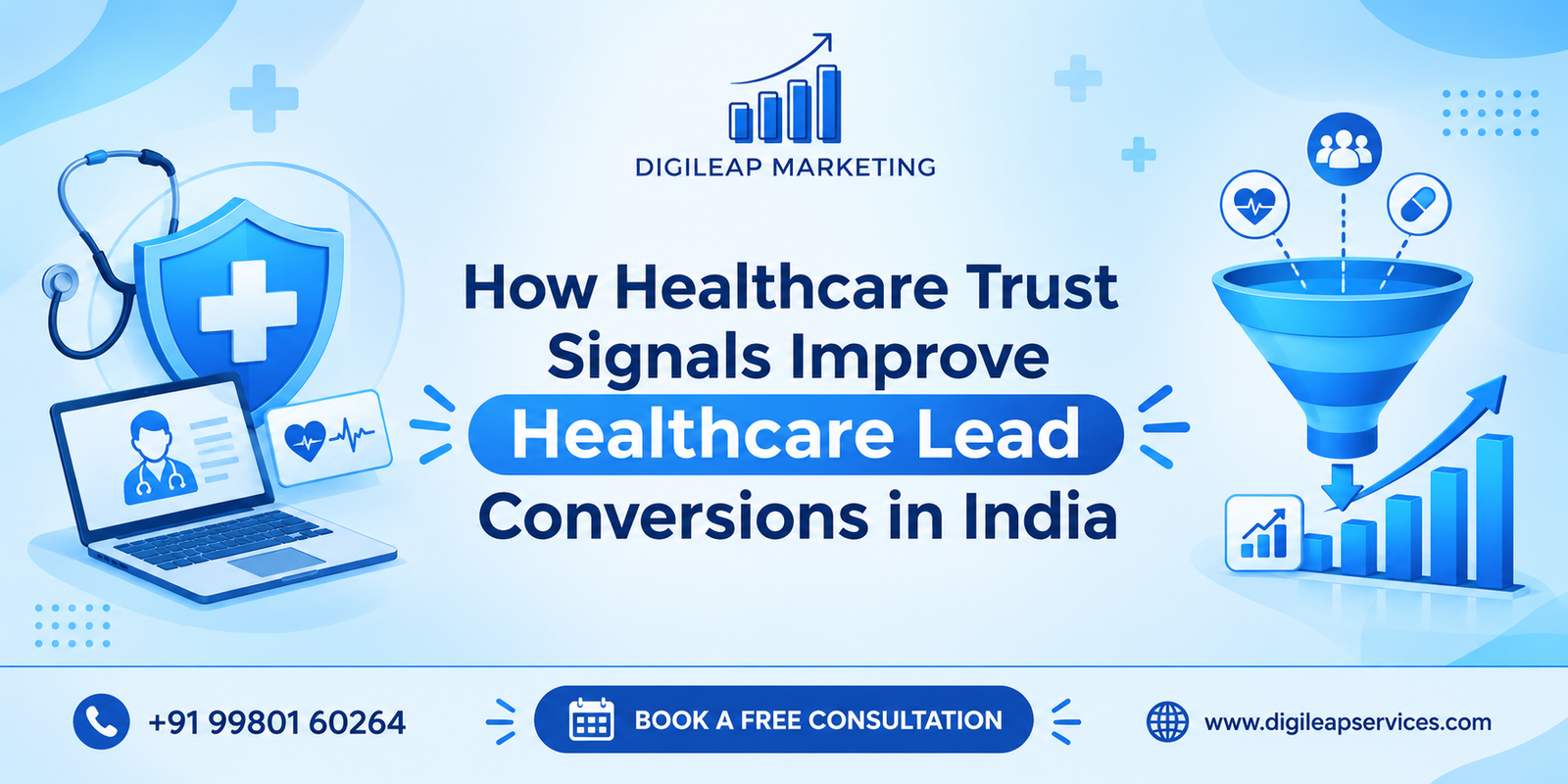
How Healthcare Trust Signals Improve Healthcare Lead Conversions in India
Healthcare decisions are never casual. In India, people think twice, ask family, read reviews, and compare options before choosing a doctor or clinic. So, even if your healthcare website gets traffic, conversions will stay low if trust is missing. That is exactly where Healthcare Trust Signals make a real difference.
In this blog, we’ll clearly explain—step by step—how trust signals help healthcare businesses in India convert more visitors into real leads. The language is simple, the flow is natural, and the focus is practical.
Why Trust Matters More Than Price in Indian Healthcare
First of all, healthcare is emotional. People are not just buying a service; they are trusting someone with their health. Therefore, price alone rarely convinces patients.
Moreover, India has countless clinics, hospitals, and online health platforms. As a result, patients often feel confused. When options feel similar, trust becomes the deciding factor.
This is why Healthcare Trust Signals are powerful. They quietly reassure visitors that they are in safe hands. Consequently, hesitation reduces, and action becomes easier.
How Healthcare Trust Signals Reduce Patient Fear
Let’s be honest—most patients visit healthcare websites with fear. They worry about wrong treatment, hidden costs, or poor service. However, trust signals slowly remove these doubts.
For example:
- Genuine patient reviews show real experiences
- Doctor credentials prove expertise
- Certifications confirm quality standards
Because of this, visitors feel calmer. And when fear goes down, form submissions go up.
In other words, trust turns curiosity into confidence.
Building Confidence Through Doctor Profiles and Expertise
In India, patients don’t trust brands—they trust doctors. That’s why showing medical expertise clearly is crucial.
Therefore, every healthcare website should highlight:
- Doctor qualifications
- Years of experience
- Specializations
- Real photos (not stock images)
Additionally, short bios written in simple language work better than long technical descriptions. When people understand who will treat them, they feel connected.
As a result, visitors stay longer and are more likely to contact you.
Why Reviews and Testimonials Influence Indian Patients
Word-of-mouth has always been strong in India. Today, online reviews are the new version of it.
Before booking an appointment, people usually:
- Check Google reviews
- Read testimonials
- Compare ratings
That’s why social proof is one of the strongest Healthcare Trust Signals.
Moreover, video testimonials work even better. Seeing real patients speak builds instant emotional trust. Consequently, visitors feel reassured and take the next step faster.
Trust Signals Improve Website Conversion Rates
A healthcare website should not just look good—it should feel trustworthy. When trust signals are placed correctly, conversions improve naturally.
How this happens:
Firstly, visitors stay longer because the site feels reliable.
Secondly, they explore services without fear.
Finally, they feel confident enough to fill out forms or make calls.
Simple trust elements like:
- “Book Appointment” buttons
- Visible contact details
- Clinic address with maps
All work better when backed by trust signals.
Why Indian Patients Prefer Verified Healthcare Providers
In India, people are cautious. Many have heard stories of fake clinics or unqualified practitioners. Therefore, verification matters a lot.
Patients look for:
- Google-verified listings
- Recognized medical certifications
- Clear clinic locations
- Updated information
When these elements are visible, doubt reduces. As a result, trust increases and lead conversions follow.
Local SEO and Trust Go Hand in Hand
Most healthcare searches in India are local. People search for “clinic near me” or “best doctor nearby.” Here, trust signals directly affect clicks.
For example:
- High star ratings attract attention
- Recent reviews increase credibility
- Complete profiles build confidence
Therefore, local SEO combined with strong trust signals brings more calls, more visits, and more leads.
Using Healthcare Trust Signals Across Marketing Channels
Trust should not stop at your website. Instead, it must flow across all marketing platforms.
Here’s how:
- Social media: Share patient stories and doctor insights
- Blogs: Educate instead of selling
- Ads: Highlight experience, not hype
- Emails: Add testimonials subtly
When trust appears consistently, people remember your brand. Consequently, they come back when they are ready.
Mistakes That Reduce Trust (Avoid These)
Even small mistakes can damage credibility. So, it’s important to avoid:
❌ Fake or copied reviews
❌ Outdated doctor profiles
❌ Broken contact details
❌ Overpromising results
Instead, honesty builds long-term trust. And long-term trust brings steady conversions.
Measuring the Impact of Trust Signals
To understand what works, tracking is essential. Fortunately, results are visible.
Look for:
- Increased form submissions
- Longer page visits
- Higher call volume
- More appointment bookings
Over time, you’ll clearly see how Healthcare Trust Signals improve performance.
Conclusion
To sum up, trust is not optional in healthcare marketing—it is essential. Especially in India, where healthcare choices are emotional and cautious, trust signals guide decisions.
When used correctly, Healthcare Trust Signals:
- Reduce fear
- Build confidence
- Increase engagement
- Improve lead conversions
In the long run, trust doesn’t just bring leads—it builds lasting patient relationships.
TL;DR
Trust signals like reviews, doctor credentials, certifications, and verified listings help Indian healthcare brands convert more leads. They reduce fear, build confidence, and encourage patients to take action. Strong trust signals across websites, local SEO, and marketing channels lead to higher conversions.
Ready to Build Patient Trust?
If you want to improve healthcare lead conversions with the right trust strategy, Digileap Services can help.
Let’s build credibility, increase confidence, and turn visitors into patients.