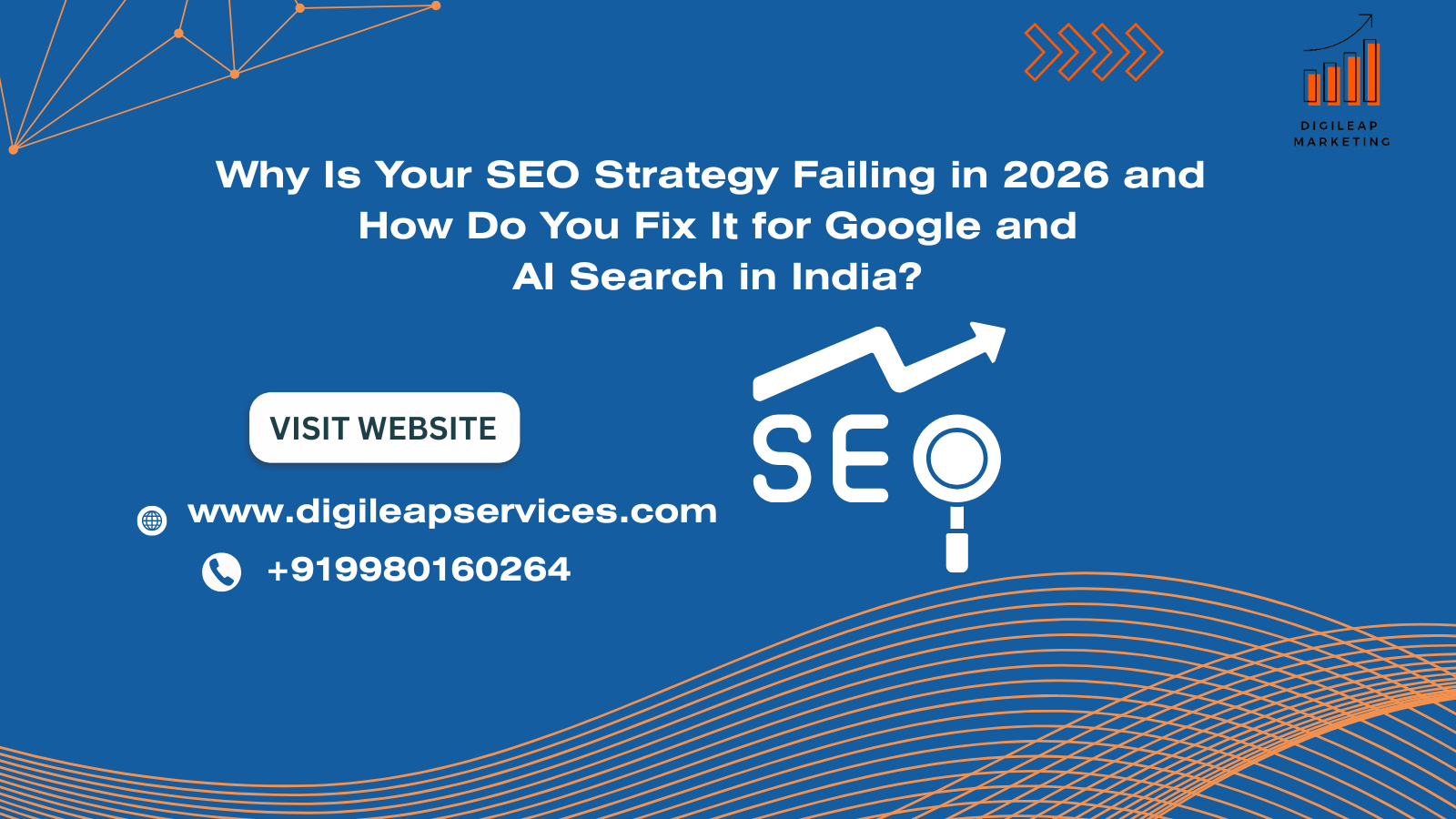
Why Your SEO Strategy 2026 India Is Failing—and How to Fix It for Google + AI Search
The Reality Check: SEO Has Changed More Than You Think
If your SEO results have dropped recently—or worse, plateaued—you’re not alone. Across India, businesses are quietly struggling with the same issue: what used to work even two years ago simply doesn’t work anymore.
Search behavior has evolved. Google is no longer just a search engine showing ten blue links. Instead, it’s becoming an answer engine, powered by AI, where users get instant responses without needing to click multiple websites. Naturally, this shift has completely changed how visibility works.
So, if your current SEO strategy 2026 India is still focused on rankings alone, you’re playing an outdated game. And unfortunately, that’s exactly why your traffic, leads, and conversions may be declining.
However, the good news is this: once you understand what’s broken, fixing it becomes much easier—and far more effective.
Why Most SEO Strategies in India Are Failing in 2026
To begin with, let’s break down the real reasons behind underperforming SEO. Because unless you identify these gaps, even the best tactics won’t deliver results.
First and foremost, many businesses are still stuck in a keyword-first mindset. While keywords are still relevant, they are no longer the foundation of SEO. Today, search engines focus on intent—what the user actually wants to achieve. For example, someone searching “best dentist in Mumbai” is very different from someone searching “how to stop tooth pain instantly.” If your content doesn’t address that difference, it simply won’t connect.
In addition, another major reason is the complete neglect of AI search optimization. Tools like AI-generated summaries and conversational search interfaces are now influencing what users see first. As a result, even if your website ranks, it might not get clicks because the answer is already displayed on the search page. This phenomenon, often called zero-click search, is rapidly growing in India as well.
Moreover, there is the issue of weak content authority. Publishing random blogs without a clear structure or niche focus no longer works. Google now favors websites that demonstrate deep expertise in a specific area. Therefore, if your content lacks depth, consistency, and relevance, it gets overshadowed by more authoritative sources.
On top of that, many websites still ignore E-E-A-T—Experience, Expertise, Authority, and Trust. Without these signals, it becomes extremely difficult to build credibility. Users in India, especially, rely heavily on trust before making decisions, so this gap directly impacts conversions.
Finally, technical issues and poor user experience continue to silently kill SEO performance. Slow-loading pages, bad mobile design, and cluttered layouts frustrate users, leading to higher bounce rates—and ultimately lower rankings.
How to Fix Your SEO Strategy 2026 India for Google and AI Search
Now that we’ve identified the problems, let’s move toward solutions. Because in reality, fixing your SEO strategy in 2026 in India is not about doing more—it’s about doing the right things strategically.
To start with, you need to shift from keyword targeting to intent mapping. Instead of building content around isolated keywords, think in terms of user journeys. What questions does your audience have? What problems are they trying to solve? And what action do they want to take next? When your content answers these questions clearly, it naturally aligns with both Google and AI-driven search systems.
Next, building topic clusters becomes essential. Rather than creating disconnected blog posts, structure your content into a central pillar page supported by multiple related articles. For instance, if you’re in digital marketing, one pillar page on SEO can be supported by blogs on technical SEO, content strategy, local SEO, and AI search optimization. This interconnected structure signals authority and improves rankings significantly.
Equally important is optimizing your content for AI extraction. Since AI tools scan for concise and structured information, your content should include clear definitions, short answer sections, bullet points, and FAQs. This not only improves readability but also increases your chances of being featured in AI-generated answers.
Furthermore, adding real experience to your content can make a huge difference. Generic information is easy to replicate, but real insights are not. Sharing case studies, practical examples, and actual results builds trust and sets your content apart. In a competitive market like India, this can be the deciding factor between getting noticed or ignored.
At the same time, don’t overlook technical SEO and user experience. A fast, mobile-friendly, and well-structured website ensures that users stay longer and engage more. This sends positive signals to search engines and improves overall performance.
Another powerful lever, especially in India, is local SEO. Since a large percentage of searches include location-based intent, optimizing your Google Business Profile, collecting reviews, and targeting local keywords can drive highly qualified traffic. This is particularly beneficial for service-based businesses.
Additionally, it’s important to expand beyond Google. Your audience is active on multiple platforms, including YouTube, Instagram, and even AI chat tools. Repurposing your content into different formats—like short videos, reels, and carousels—helps you reach a wider audience and strengthens your overall digital presence.
Finally, shift your focus from traffic to conversions. High traffic numbers may look impressive, but they don’t always translate into business growth. Instead, measure success through leads, inquiries, and revenue. This approach ensures that your SEO efforts are aligned with real business outcomes.
A Simple Execution Plan That Actually Works
Now, all of this might sound overwhelming, but it doesn’t have to be. In fact, consistency matters more than complexity.
A practical weekly plan could look like this: create one in-depth pillar piece, publish two to three supporting blogs, repurpose that content into short-form videos, and update older articles to keep them relevant. Over time, this consistent effort builds authority and momentum.
The key here is not perfection—it’s persistence. Even small improvements, when done regularly, compound into significant results.
The Future of SEO in India: What You Must Understand
Looking ahead, one thing is clear: SEO is not disappearing—it’s evolving. The focus is shifting from simply ranking pages to becoming the most reliable and relevant answer.
This means your competition is no longer just other websites. Instead, you’re competing with AI-generated responses that aim to deliver instant value. Therefore, your content must go deeper, be clearer, and provide something unique that AI cannot easily replicate.
In essence, the brands that will win in 2026 are those that combine human insight with AI-friendly structure.
Final Thoughts: Time to Upgrade Your SEO Strategy
If your current SEO strategy 2026 India isn’t delivering results, it’s not a sign to give up—it’s a signal to evolve. Because the rules of the game have changed, and those who adapt early will gain the biggest advantage.
So rather than focusing on quick fixes, take a step back and rebuild your strategy with intent, structure, and user value at its core. That’s where real, sustainable growth comes from.
Ready to Fix Your SEO and Get Real Results?
If you want to:
- Increase qualified leads
- Rank higher on Google
- Get visibility in AI-driven search
Then it’s time to implement a strategy that actually works in today’s landscape.
Explore expert SEO solutions here: Digileap Services
TL;DR
Your SEO is failing because it’s outdated. To fix your SEO strategy 2026 India, focus on user intent, build topical authority, optimize for AI search, improve user experience, and measure real business results—not only traffic