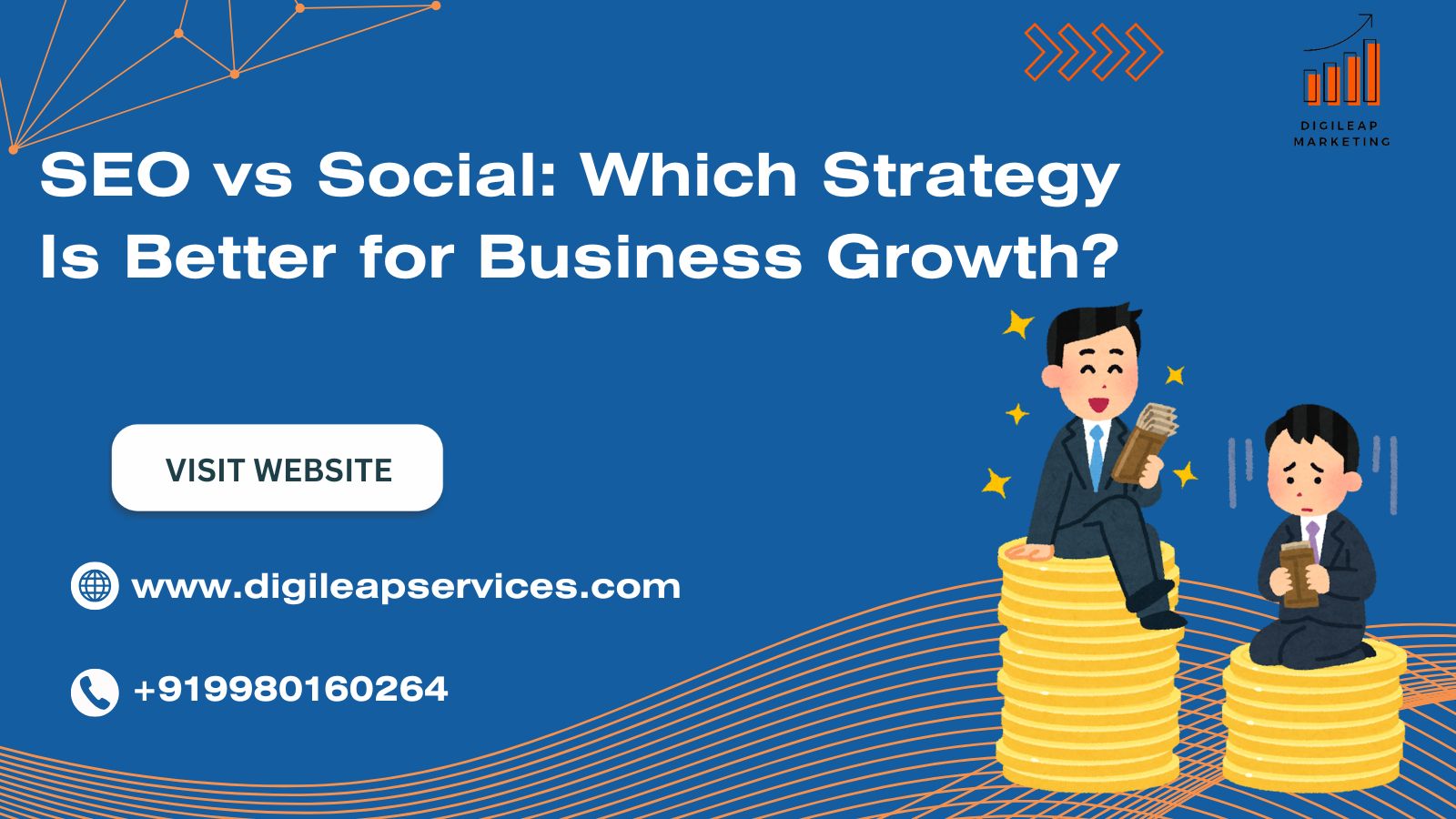
SEO vs Social: Which Strategy Is Better for Business Growth?
Every business today wants one thing — stronger online visibility. However, the real challenge begins when companies try to decide where to invest their marketing efforts. Some brands focus heavily on search engine rankings, while others spend most of their time creating social media content. As a result, the debate around SEO vs Social has become more important than ever.
On one hand, SEO helps businesses appear on Google when customers actively search for products or services. On the other hand, social media creates conversations, builds communities, and increases brand awareness almost instantly. Both strategies can drive growth, yet they work in very different ways. Therefore, choosing between them often feels confusing, especially for growing businesses with limited budgets.
Interestingly, consumer behavior has changed significantly over the last few years. People now discover brands through Instagram reels, LinkedIn posts, TikTok videos, and even YouTube shorts. At the same time, Google still processes billions of searches every single day. This means businesses cannot afford to ignore either channel completely. Instead, they need to understand how each strategy contributes to long-term growth.
The discussion around SEO vs Social is not about proving one strategy is superior in every situation. Rather, it is about identifying which channel aligns better with specific business goals. While some businesses need consistent search traffic, others need rapid engagement and visibility. Consequently, understanding the strengths and limitations of both approaches is essential for sustainable digital success.
What Is the Difference Between SEO and Social Media?
To understand the real difference between SEO and social media marketing, businesses first need to understand how audiences behave online. SEO, or Search Engine Optimization, focuses on improving a website’s visibility on search engines like Google. In simple terms, SEO helps businesses appear when users search for relevant keywords. For example, if someone searches for “best digital marketing agency,” optimized websites have a better chance of appearing on the first page of Google results.
SEO involves multiple elements, including keyword research, content optimization, technical website improvements, backlink building, and user experience enhancements. Although the process takes time, the results can be extremely valuable. In fact, strong SEO strategies often continue generating traffic for months or even years after content is published. Therefore, SEO is usually considered a long-term investment.
Social media marketing, meanwhile, works differently. Instead of targeting search intent, social media focuses on capturing attention. Platforms like Instagram, Facebook, LinkedIn, TikTok, and X allow businesses to interact directly with audiences through content, comments, stories, videos, and live sessions. Furthermore, social media gives brands a personality. It allows businesses to connect emotionally with customers rather than simply appearing in search results.
The biggest difference in the SEO vs Social debate lies in audience intent. People searching on Google often already know what they want. They are actively looking for solutions, products, or information. Social media users, however, are usually browsing for entertainment, inspiration, or updates. As a result, SEO captures existing demand, while social media often creates new demand.
Another important difference is content lifespan. SEO content tends to remain discoverable for a long time. A well-optimized blog can continue bringing traffic years later. Social media content, however, usually has a shorter lifespan. Posts may perform well for a few hours or days before disappearing from feeds. Consequently, businesses must post consistently to maintain visibility on social platforms.
Still, both strategies contribute to brand growth in different ways. While SEO builds authority through search rankings, social media builds familiarity through engagement. Therefore, understanding these differences is crucial before choosing where to invest marketing resources.
SEO vs Social for Traffic and Leads
Traffic generation is one of the biggest reasons businesses invest in digital marketing. However, the quality and consistency of traffic can vary significantly between SEO and social media. This is exactly why the conversation around SEO vs Social remains highly relevant for modern businesses.
SEO is widely known for generating long-term organic traffic. Once a website ranks well on Google, it can continue attracting visitors without requiring constant advertising spend. For instance, a blog optimized around valuable keywords may attract thousands of visitors every month. Moreover, SEO traffic often comes from users actively searching for solutions. This means visitors arriving through search engines usually have stronger buying intent.
Additionally, SEO supports businesses at every stage of the customer journey. Informational blogs attract early-stage users, while service pages target customers ready to make purchasing decisions. As a result, SEO not only drives traffic but also improves lead quality over time.
Social media, by contrast, offers faster visibility. A single viral reel or trending post can bring massive traffic within hours. Furthermore, platforms like Instagram and TikTok make it easier for brands to gain exposure quickly, especially if the content is creative and engaging. This makes social media highly attractive for startups, influencers, and visually driven brands.
However, there is also a limitation. Social media traffic often depends heavily on consistency and trends. If posting stops, engagement and visibility can decline rapidly. Unlike SEO, where content may rank for years, social posts usually fade quickly. Therefore, maintaining growth on social platforms requires ongoing activity.
Lead quality also differs significantly. SEO leads generally come from users searching with intent. Someone typing “best accounting software for small businesses” is likely closer to making a decision than someone casually scrolling through Instagram. Nevertheless, social media excels at relationship building. It allows businesses to nurture audiences through repeated exposure, storytelling, and community engagement.
In the broader SEO vs Social comparison, it becomes clear that both channels attract users differently. SEO focuses on demand fulfillment, while social media focuses on attention and discovery. Consequently, businesses should align their traffic strategy with customer behavior and marketing objectives.
Cost and ROI Comparison
Marketing budgets matter for every business. Naturally, companies want to know which strategy delivers better returns over time. This is another major reason why the SEO vs Social discussion continues to dominate digital marketing conversations.
SEO typically requires patience. Businesses must invest in content creation, website optimization, technical improvements, and backlink strategies. Initially, results may seem slow. In fact, it often takes several months before websites begin ranking consistently on Google. However, once rankings improve, the long-term return on investment can be impressive.
One of the biggest advantages of SEO is sustainability. High-ranking pages continue driving organic traffic without requiring constant advertising spend. Although SEO requires ongoing maintenance, the traffic generated often becomes more cost-effective over time. Consequently, many businesses see SEO as a long-term growth asset rather than a short-term campaign.
Social media marketing, meanwhile, delivers faster visibility but often demands continuous effort. Brands need to create regular posts, engage with followers, respond to comments, analyze trends, and frequently experiment with new content formats. Additionally, organic reach on many social platforms has declined over the years, pushing businesses toward paid promotions and advertising.
This means social media campaigns can become expensive if brands rely heavily on ads for reach. While paid social campaigns may generate quick results, traffic often disappears once the campaign budget ends. Therefore, social media ROI can fluctuate depending on consistency, creativity, and advertising spend.
Another important factor in the SEO vs Social debate is trust. Websites ranking high on Google are often perceived as more authoritative and credible. Many users naturally trust top search results because they believe Google prioritizes quality and relevance. Social media, however, builds trust differently. Instead of relying on rankings, it builds familiarity through consistent interaction and storytelling.
Interestingly, businesses combining both strategies often achieve stronger results. SEO helps attract users searching with intent, while social media keeps audiences engaged and emotionally connected. Consequently, integrating both channels can maximize visibility, trust, and customer retention.
Which Strategy Is Better for Your Business?
The answer to the SEO vs Social debate depends entirely on business goals, industry type, and audience behavior. There is no universal solution because different businesses require different growth strategies.
For businesses seeking long-term organic traffic, SEO is usually the better choice. Service-based businesses, local companies, B2B brands, and educational platforms often benefit greatly from search visibility. Since potential customers actively search for solutions online, SEO helps these businesses attract highly relevant traffic consistently.
SEO is also highly effective for businesses wanting predictable lead generation. Blogs, landing pages, and optimized service pages continue working long after publication. Therefore, SEO becomes especially valuable for businesses focused on sustainable growth.
Social media, however, works exceptionally well for brands prioritizing awareness and engagement. Fashion brands, restaurants, fitness creators, influencers, lifestyle businesses, and entertainment companies often thrive on social platforms. Since these industries depend heavily on visuals and emotional storytelling, social media becomes a powerful marketing tool.
Additionally, social media helps brands humanize their business. Customers today want more than products or services. They want authenticity, interaction, and relatable content. Consequently, brands with strong social media presences often build stronger emotional connections with audiences.
Still, the smartest businesses rarely rely on only one strategy. Instead, they combine SEO and social media strategically. A well-written blog optimized for SEO can be promoted through social channels for additional reach. Similarly, social media content can drive traffic back to optimized website pages. This creates a powerful cycle of visibility and engagement.
Ultimately, the real winner in the SEO vs Social** debate is balance. Businesses that integrate both strategies effectively usually achieve stronger brand visibility, better customer relationships, and more sustainable growth over time.
Conclusion
The debate around SEO vs Social continues because both strategies offer valuable yet different benefits. SEO helps businesses build long-term visibility, attract high-intent traffic, and generate sustainable organic growth. Social media, meanwhile, delivers instant engagement, brand awareness, and stronger audience relationships.
While SEO requires patience and consistency, it often provides lasting results that continue generating traffic over time. Social media, however, creates faster exposure and helps brands connect emotionally with customers. Therefore, choosing between them depends largely on business objectives, industry type, and audience behavior.
However, businesses no longer need to think in terms of choosing one over the other. In today’s digital landscape, the most successful brands combine both strategies to maximize visibility and growth. SEO attracts customers searching for answers, while social media keeps audiences engaged and connected.
In the end, the real goal is not simply winning the SEO vs Social** debate. Instead, it is about building a marketing strategy that supports long-term business success in an increasingly competitive online world.
TL;DR
The debate around SEO vs Social depends on business goals and audience behavior. SEO provides long-term organic traffic, stronger search visibility, and high-intent leads. Social media, meanwhile, creates instant engagement, rapid brand awareness, and audience interaction. While SEO delivers sustainable ROI over time, social media drives faster exposure and community building. Ultimately, businesses that combine both strategies often achieve the strongest digital growth and long-term marketing success.
Want stronger rankings, better engagement, and consistent business growth? Build a balanced digital strategy that combines the long-term power of SEO with the audience reach of social media.