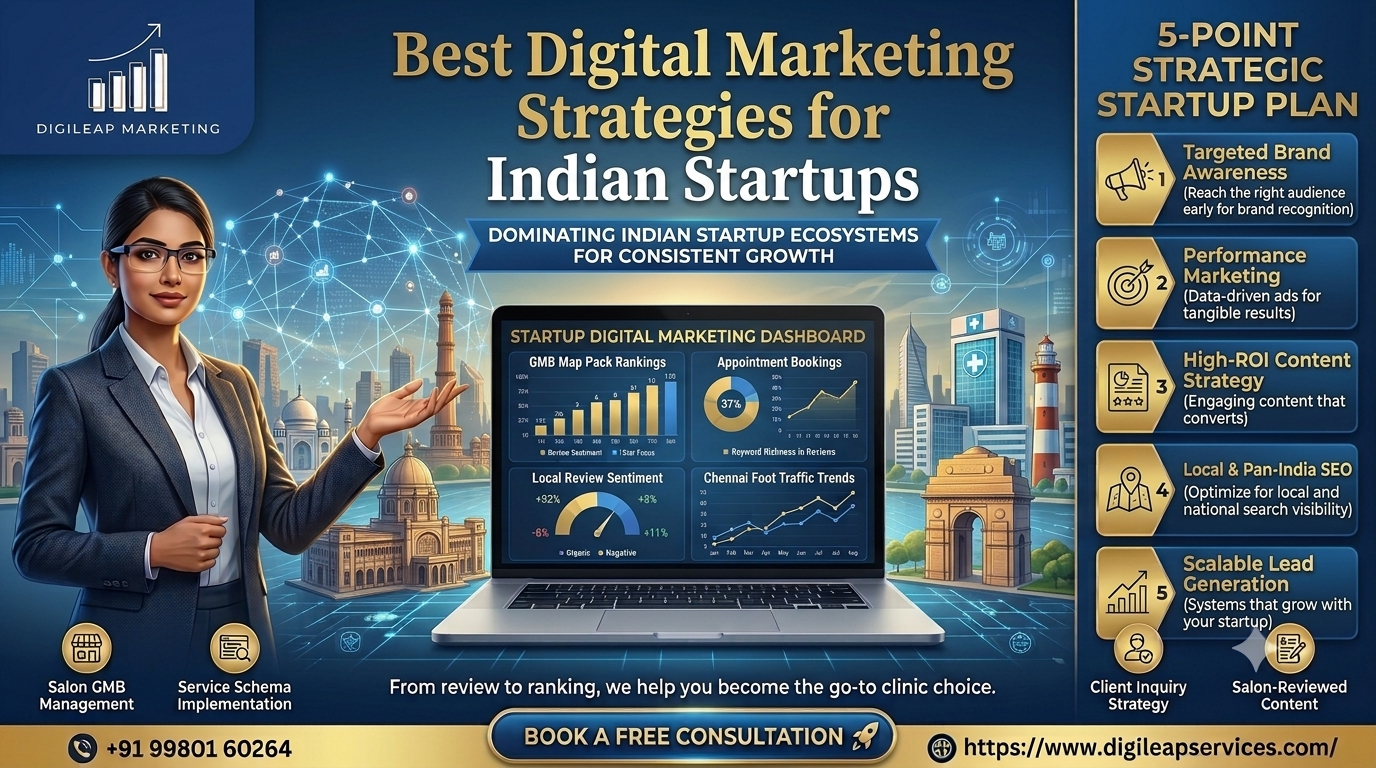
Best Digital Marketing Strategies for Indian Startups
Introduction
Starting a business in India brings many opportunities. However, reaching the right customers can be hard when a startup has a small budget and many competitors. A great product alone is not enough. Customers must know your brand, trust your offer, and see why it solves their problems. That is where Startup Digital Marketing India becomes important. It helps new businesses build brand awareness, attract the right audience, and turn visitors into paying customers.
According to the Government of India’s Press Information Bureau, India had more than 2.23 lakh government-recognised startups by 31 March 2026. These businesses created over 23.36 lakh direct jobs. Therefore, startups need a clear plan to stand out and grow in a busy market. Instead of trying every marketing channel, founders should focus on strategies that match their goals, customers, and budget.
H.O.O.K. + V.A.L.U.E.: A Simple Growth Framework
Successful marketing starts with a clear message. The H.O.O.K. + V.A.L.U.E. formula helps startups attract attention and guide customers towards action. H.O.O.K. means Headline, Offer, Opportunity, and Key action. First, create a headline that speaks to a customer’s problem. Next, present a useful offer. Then, show the opportunity your product provides. Finally, guide the reader towards one clear action.
V.A.L.U.E. stands for Visibility, Audience, Learning, Usefulness, and Engagement. These five ideas help startups build a strong digital presence. For example, a new skincare brand can improve visibility through search engines, reach its audience through social media, learn from customer feedback, share useful skincare advice, and engage buyers through email. Together, these steps make Startup Digital Marketing India more focused and measurable.
1. Build a Strong Website That Converts
Your website often creates the first impression of your business. Therefore, it should load quickly, work well on mobile devices, and explain your offer in simple words. Visitors should understand what you sell, who you help, and why they should choose you.
Moreover, every important page should guide visitors towards a clear action. This could be booking a call, requesting a demo, buying a product, or signing up for a newsletter. Add customer reviews, product details, contact information, and answers to common questions to build trust.
However, do not focus only on website design. Track how visitors use your site. If people visit a product page but leave without buying, review the price, page content, checkout process, and calls to action. Small improvements can help turn more visitors into customers.
2. Use SEO to Attract Customers Through Search
Search engine optimisation, or SEO, helps people find your business when they search for products or services. Unlike paid ads, organic search can bring relevant visitors over time without charging for every click. Still, SEO needs regular work and does not deliver instant results.
Start by researching the words your customers use. For example, a startup selling accounting software may target searches such as “accounting software for small businesses” or “easy GST billing software”. Then, create useful landing pages and blogs that answer these questions clearly.
In addition, improve page titles, headings, internal links, and image descriptions. If your startup serves a local market, keep your business details consistent and create a complete Google Business Profile when eligible.
For more practical ideas, explore Digileap India, which offers digital marketing services and insights. A well-planned SEO strategy can make Startup Digital Marketing India more sustainable by helping businesses attract customers who are already looking for a solution.
3. Create Helpful Content That Builds Trust
Content marketing allows startups to explain their products, answer customer questions, and show their expertise. Instead of publishing sales messages every day, share information that helps people make better decisions.
For example, a financial technology startup could publish guides on budgeting, payment safety, or business cash flow. Likewise, a fitness startup could share workout tips, beginner guides, and expert advice. These topics give people a reason to visit your website and follow your brand.
Furthermore, use different content formats to reach people at different stages of the buying journey. Blogs can explain complex topics, short videos can show a product in action, and case studies can explain how your solution helped a customer.
Keep your content clear, accurate, and original. Answer real questions, use examples where possible, and update older pages when information changes. As a result, your brand can build trust while improving its search visibility.
4. Use Social Media to Reach the Right Audience
Social media can help startups introduce their products, connect with customers, and build a community. However, you do not need to be active on every platform. Choose channels based on where your target customers spend time.
For instance, LinkedIn can work well for B2B startups that sell software or professional services. Instagram may suit fashion, beauty, food, and lifestyle brands. YouTube can help businesses explain complex products through demonstrations and tutorials.
Also, mix educational posts, customer stories, product demonstrations, and behind-the-scenes content. Ask questions and respond to comments to encourage real conversations. At the same time, review which posts bring website visits, enquiries, and sales instead of judging success only by likes.
A 2025 report published by Meta and Alvarez & Marsal India found that 88% of the surveyed high-growth startups worked with creators, including niche influencers and celebrities. This suggests that creator partnerships can play a role in brand building. Nevertheless, choose creators whose audiences match your customers, and check engagement quality before spending money.
5. Run Targeted Paid Advertising Campaigns
Paid advertising can help startups reach potential customers faster. Google Ads can connect your business with people searching for a solution, while social media ads can introduce your offer to selected audiences.
However, start with a clear goal. You might want to generate leads, increase product sales, or encourage demo bookings. Then, set a budget that your business can afford and test a small number of campaigns.
Create separate ads for different customer groups. Use a clear message, a relevant landing page, and one main call to action. For example, a software startup could test an ad offering a free product demo against another offering a free trial.
Most importantly, track cost per lead, conversion rate, and customer acquisition cost. If a campaign attracts clicks but no sales, investigate the offer and landing page before increasing the budget. Paid ads work best when they support a wider growth plan rather than replace it.
6. Build Customer Relationships Through Email Marketing
Getting a new customer often takes more effort than keeping an existing one. Therefore, email marketing can help startups build long-term relationships and encourage repeat purchases.
Start by collecting email addresses with permission through useful resources, newsletters, product sign-ups, or special offers. Then, send messages that match each subscriber’s needs. New users may need a welcome series, while existing customers may benefit from product tips, updates, or related offers.
Moreover, divide your audience into groups based on their interests and actions. This allows you to send more relevant messages instead of sending the same email to everyone. Keep subject lines clear, offer useful information, and include a simple next step.
Track open rates carefully, but focus more on clicks, conversions, unsubscribes, and revenue. These measures provide a better view of whether your emails support business goals.
7. Use Data and AI to Improve Marketing
Marketing becomes more effective when startups use data to guide their decisions. Tools such as Google Analytics can help you understand where visitors come from, which pages they view, and what actions they take.
AI tools can also support research, content planning, customer service, and campaign analysis. For example, a startup can use AI to organise customer feedback, identify common questions, or draft ideas for social media posts. However, review all AI-generated content before publishing it. Check facts, remove generic claims, and add real knowledge about your product and customers.
Set a few clear measures for each channel. SEO may focus on relevant organic traffic and enquiries. Paid ads may focus on customer acquisition cost. Email marketing may focus on sales and repeat purchases.
Review these measures every month. Then, invest more in channels that bring suitable customers and improve or stop activities that waste money. This makes Startup Digital Marketing India easier to manage as your business grows.
Conclusion
Indian startups do not need a huge marketing budget to build a strong online presence. Instead, they need a clear audience, a useful offer, consistent communication, and a way to measure results. Start with a fast website, helpful content, and a focused SEO strategy. Then, use social media, paid advertising, and email marketing to reach and retain the right customers.
Finally, test new ideas, learn from customer behaviour, and improve your campaigns over time. By following the H.O.O.K. + V.A.L.U.E. formula, startups can make better marketing choices and build a stronger path towards steady growth.
TL;DR
Startup Digital Marketing India works best when startups focus on the right customers and measurable results. Build a mobile-friendly website, invest in SEO, publish useful content, choose relevant social platforms, test paid ads, and use email to retain customers. Track results with analytics and use AI carefully to improve your work. Start small, learn from the data, and scale the strategies that bring real business value.